
Professional photography pays for itself when it performs three roles at once. It sells the feeling that earns the click, it closes the sale on the product page, and it fills months of content from a single planned shoot. Photography isn't a one-off expense. It's a working asset on your website, marketplace listings, ads, email and social, every day it's live. A shoot that costs a few thousand dollars and yields dozens of usable images often costs less per image than assembling content shoot by shoot.
Here's where the return comes from.
1. Lifestyle imagery earns the click; product imagery closes the sale
People buy on emotion first. On a fitness brand's site, the image that draws someone in isn't a shoe on white; it's an athlete mid-sprint, looking strong, and the viewer wants to feel the same way. If your website, ads and social lack imagery that creates that feeling, you're relying on the product to sell itself, and few products can.
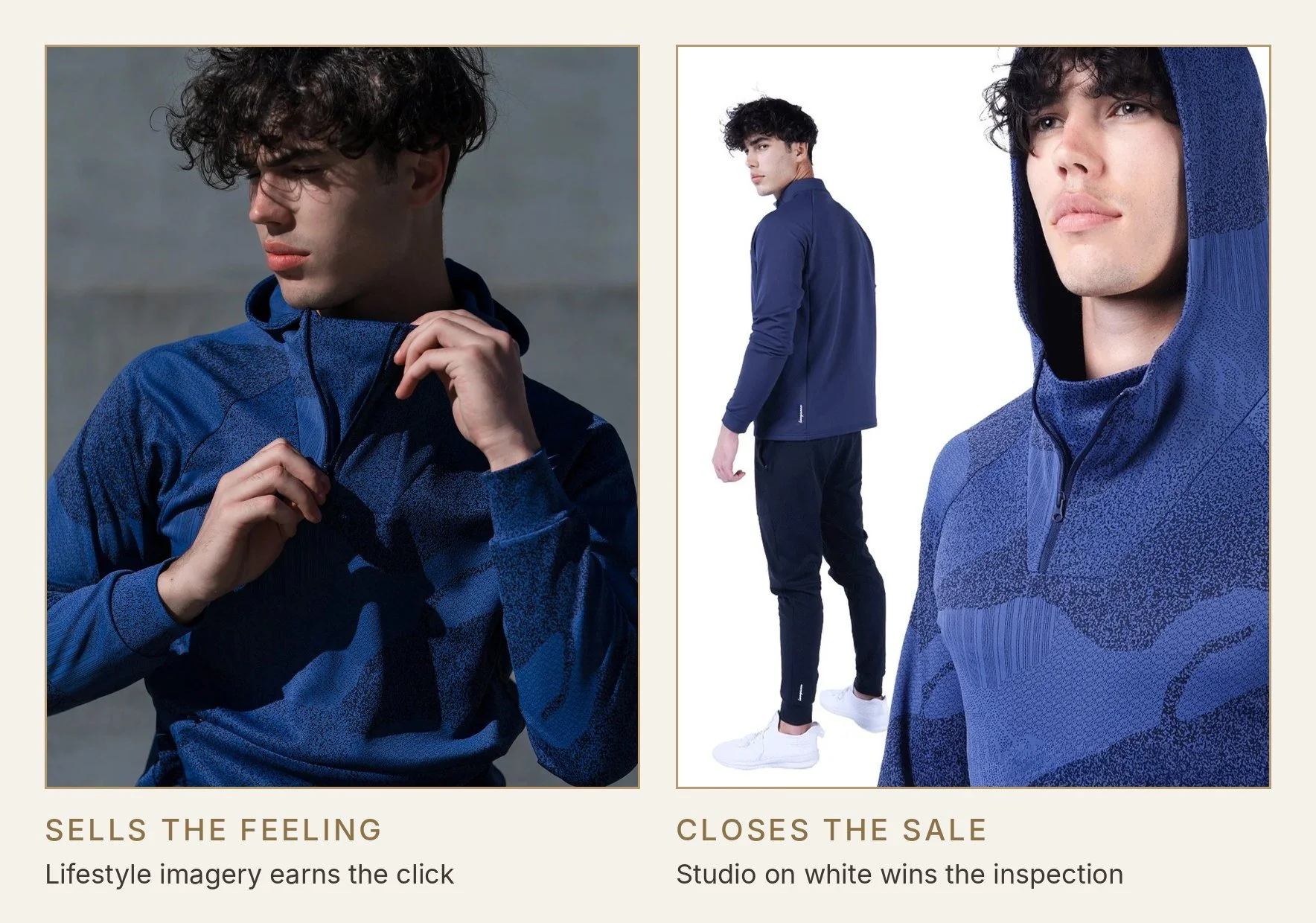
Then comes the inspection. On the product page, buyers scrutinize color, detail and how the product will look on them. Colors that are slightly off, a soft image or a product that lacks impact on screen quietly cost you sales, after you've already done the hard work of bringing the customer there. Accurate, consistent product photography also sets the right expectations, reducing "it looked different online" returns. I break down how to fund both in how much to budget for product photography.
2. One planned shoot fills months of content
The greatest return comes from planning. For Gymwrap, a fitness apparel brand, we captured 50 SKUs in a single 10-hour day with four to five models: product, lifestyle and on-model imagery for the entire range, in one cohesive look.
Compare that with booking small shoots as you go: different photographers, different lighting, images that never quite align, and the same setup costs paid repeatedly. One well-planned day can supply your website, marketplace listings, launch emails, ads and social for months. I explore this further in how activewear brands shoot once and create months of content.
3. Consistency builds trust
When every product page, ad and post looks unmistakably like the same brand, customers trust it more. A mix of professional, phone-shot and supplier imagery makes even an exceptional product feel less established. Consistency is difficult to quantify, but buyers register it immediately.
4. Doing it cheaply usually means doing it twice
I've seen brands choose a less expensive photographer, return when the images weren't usable, and pay for the shoot again. The lowest quote isn't the lowest cost if you have to reshoot.
Clients rarely share their sales figures with their photographer, and I wouldn't publish them if they did. What I hear consistently is how different the brand feels once the new photography and video go live. One client told me our work took their business "from a level four to a level twenty." That's the real return: a brand that finally looks as good as the product it sells.
How to measure the return on a shoot
You don't need an agency dashboard to judge whether photography is paying off. Start with two measures.
1. Cost per usable image. Divide the total cost of the shoot by the number of final images you'll actually use.
Cost per image = total shoot cost ÷ final images used
For example, a $3,000 shoot that delivers around 25 finished, edited images works out to about $120 per image. If those images run across your website, Amazon listings, ads, email and social for a year, each one is used dozens of times. Compare that with a $1,000 shoot that delivers 15 images, of which you use only 5: that's $200 for every image you actually use.
2. What changes after the new images go live. Compare a few weeks before and after, on the same pages and campaigns:
Product-page conversion rate (orders ÷ visitors), in Shopify or Google Analytics
Ad click-through rate and cost per purchase for ads using the new images versus the previous ones
Return and exchange reasons, particularly "looked different from the photo"
Time saved: how many weeks of social and email content came from one shoot
Where possible, test old and new images side by side on the same product or ad before switching everything over. That's the clearest proof you'll get.
When professional photography isn't worth it yet
Not every business needs a full production. If you're testing a product with no traffic yet, clean images on white may be all you need for now, and that can start small. The investment pays off once people are actually seeing your images: on a site with traffic, in paid ads, on marketplace listings or during a launch. That's when stronger imagery converts existing attention into sales.
To decide between catalog and campaign imagery, read e-commerce vs. campaign photography.
FAQ
Is professional product photography worth it for a small brand?
Usually, once you have traffic or are running ads. Start with clean product shots of your best sellers, then add lifestyle imagery as you grow.
Can't I just shoot it on my phone?
For quick social content, sometimes. For product pages and ads, phone images typically fall short on color accuracy, consistency and detail, which is where sales are won or lost.
How long do professional photos last?
Product images remain useful as long as the product and packaging stay the same. Lifestyle and campaign imagery is typically refreshed each season or launch.
How do I get the most value from a shoot?
Plan it. A clear brief, a mood board and a shot list covering every channel you'll use means one day produces everything you need. See how to brief a commercial photographer.
Considering a shoot?
Tell me what you're selling and where the images will run, and I'll plan a shoot that delivers the most usable images for your budget. I produce across Los Angeles, Orange County and San Diego. Get in touch here.