
How to brief a commercial photographer and why most brands get it wrong
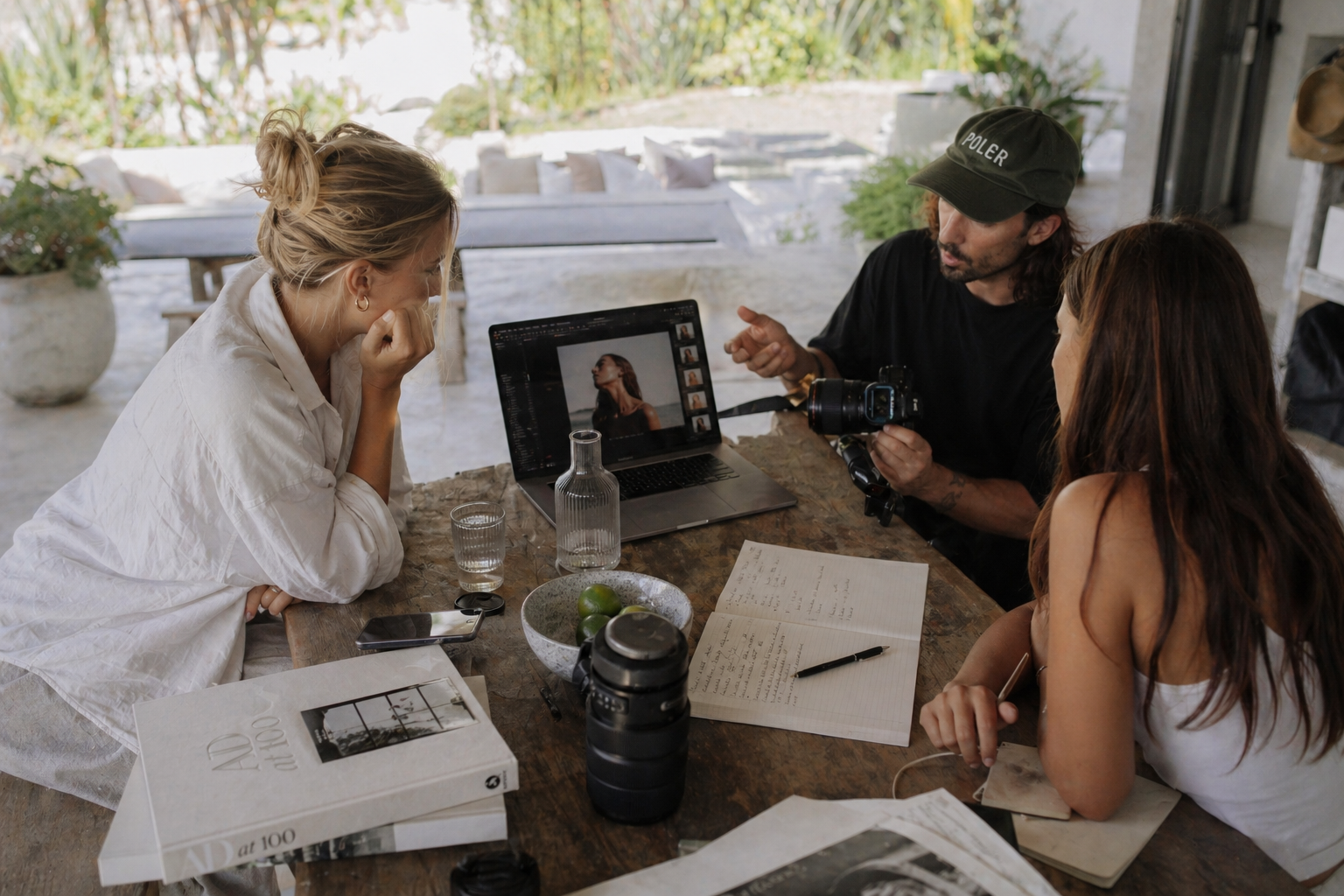
If you're planning a brand shoot and you're not totally sure what goes into a brief, you're not alone. Most brands we work with in Los Angeles come to us at different stages. Some have everything mapped out, some have a product and a general direction, and some just know they need better images and aren't quite sure where to start. All of that is completely fine.
What we've noticed over the years is that the shoots that go really well almost always have one thing in common: the brand came in knowing what they needed the images to do. Not a finished brief necessarily, just a clear sense of purpose. This is about how to get there.
Your brief is also how you find the right photographer
This is something most brands don't think about until they're already deep in the process, and it's honestly one of the more useful things to know going in.
Your brief isn't just a document you hand over so we know what to shoot. It's also one of the best tools you have for figuring out whether a photographer is actually worth working with. Send a rough brief to a few photographers and pay attention to what comes back. One might confirm availability and send over a rate card. Another might ask a couple of smart questions that show they genuinely read it. A third might come back with a perspective on the project you hadn't considered, or flag something that seemed a little unclear before it becomes a problem on set.
That last response is the one you want. We always tell brands to send something out before they've fully committed to anyone. What comes back is usually more telling than anything in the portfolio.
Know where the images are going before you reach out
This is the conversation most brands skip, and it's the one that makes the biggest difference once we're on set together.
A lot of briefs come in with something like "we need content for Instagram and the website." That's a starting point, but it leaves a lot of room for things to go sideways. An image built for a full-bleed website hero needs completely different framing than something designed to stop someone mid-scroll on their phone. Paid social assets need breathing room in specific places so copy can sit over them without covering the subject. A campaign launch has a completely different energy and shot list than content you're planning to roll out gradually over a few months.
None of this is complicated once you think it through, and we're always happy to work through it together if you're not sure. The more specific you can be about where the images are living and what they need to do, the more we can build the shoot around what actually matters to your brand.
A mood board does the work that words can't
Here's something that comes up on almost every project we do. A brand describes what they're going for, we nod along, and then shoot day arrives and everyone realizes they had completely different pictures in their heads. It's genuinely nobody's fault. Visual direction is just hard to communicate in words, and in LA especially, where every brand has a strong point of view, that gap shows up fast.
A mood board closes it. Fifteen minutes pulling references on Pinterest or from campaigns you've loved gives us more useful information than an hour spent trying to describe it. What you're actually communicating isn't the subject matter. It's the light, the color temperature, the negative space, the overall feeling. Those things translate directly into how we build the shoot.
The references don't have to be from your industry either. Some of the most useful mood boards we've received come from architecture, interiors, or film. If the visual feeling is right, it works. And just so you know, we're not going to replicate what you send. We use it to understand how you see your brand, and then we build something original that fits inside that sensibility.
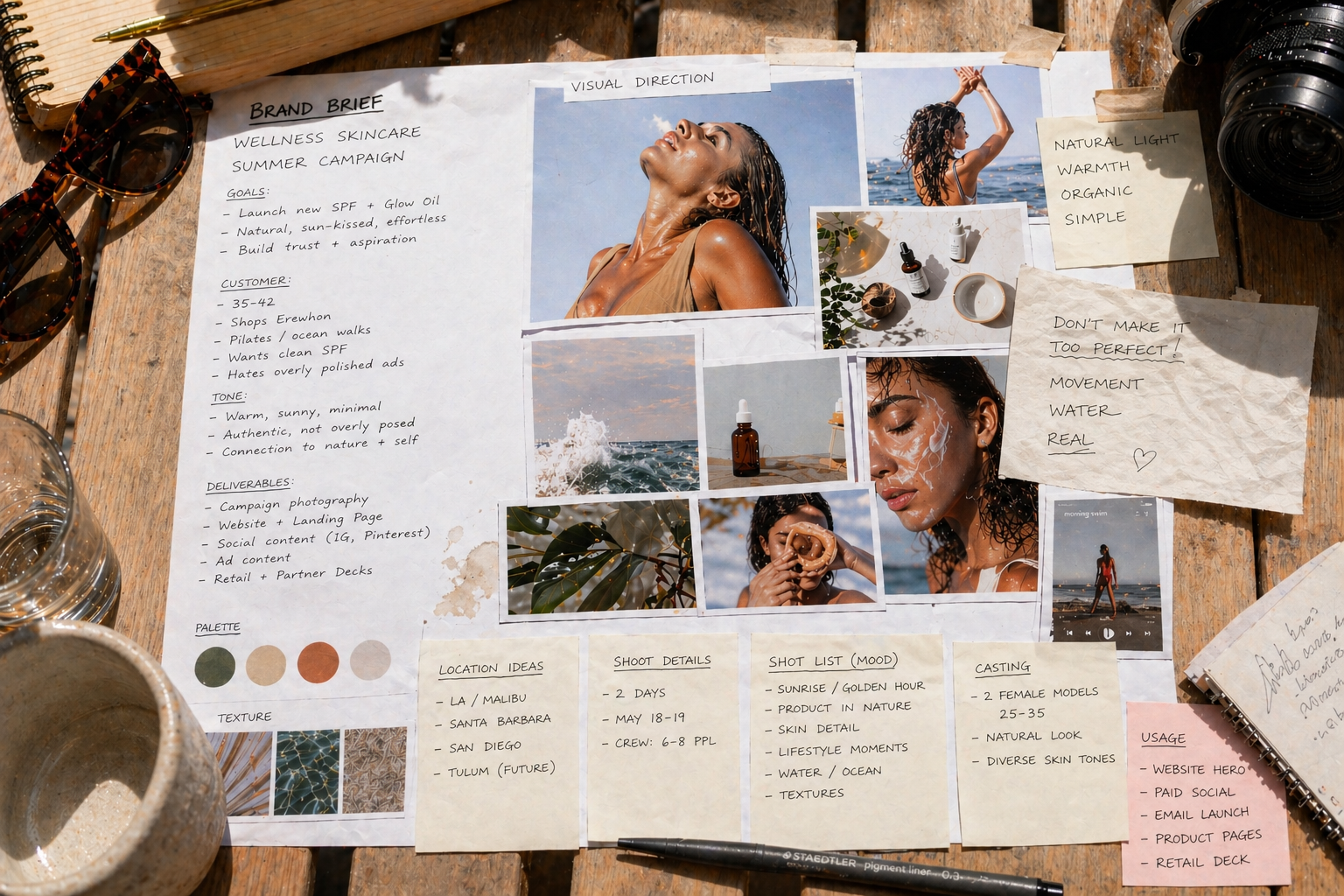
A brand brief and mood board for a wellness skincare campaign. This is the kind of direction that makes a shoot run smoothly from day one.
Sending the product is not the same as sending a brief
Sending just the product is something we see all the time, and honestly it's a totally fine place to start. But a product by itself doesn't give us much to work with creatively, and that gap tends to show up on set in ways that are hard to fix in the moment.
What we really need to understand is the story around it. Who's buying this? What do you want someone to feel when they see the image? Is the brand trying to come across as raw and editorial, or clean and considered? Is the customer a 28-year-old in Silver Lake or a 45-year-old in Newport Beach? Those details shape everything: the location, the talent, the lighting, the energy of the whole shoot.
The product is what we're photographing. The brief is what tells us why it matters and who it's for. Once we have that, we can build something that actually connects.
What a good brief actually includes
The best briefs aren't long. They're specific. One of our favorite projects last year started with a single page. A wellness brand out of Venice came in with a paragraph about their customer, a shot list of twelve images, and a Pinterest board that was mostly architecture and natural light interiors. We built the entire shoot around that one page and it was honestly one of the smoothest productions we've done.
Here's what actually matters:
Who you are and what you sell. Two or three sentences written for someone who has genuinely never heard of your brand. What do you make, who is it for, and what makes it worth paying attention to.
The customer seeing these images. The more specific you can be here, the more it shows up in the work. "Health-conscious consumers" gives us almost nothing to build from. "Men and women in their late 30s who train seriously, shop at Erewhon, and are skeptical of anything that feels overly marketed" gives us a shoot we can actually design around.
A shot list. The specific images you need. If you're not entirely sure yet, that's completely fine to say. We'll help you build it out once we understand the scope of the project and the platforms you're creating for.
A mood board. Not optional, and it really doesn't need to be polished. A shared Pinterest board or a folder of screenshots works perfectly.
What you don't want. This is the part almost every brief leaves out, and it's genuinely one of the most useful things you can share with us. If there's a visual direction or tone that feels completely wrong for your brand right now, saying so upfront saves everyone a lot of time.
Timeline and where the images are going. When you need them and how you're planning to use them affects scheduling, licensing, and the quote you receive. Getting this in early just means the whole process runs cleaner.
Ready to start a project in Los Angeles or San Diego?
Whether you have a fully built-out brief or just a rough idea you've been sitting on, we'd love to hear about it. Some of our best projects started with nothing more than "we need images but we're not sure exactly what yet" and that's a completely fine place to begin.
Tell us what you're working on and we'll take it from there. No pressure, no commitment, just a straightforward chat about what you're trying to build and whether we're the right fit to help you get there.