
Short answer: product photography presents the product on its own, typically in a studio under controlled light, so customers see exactly what they're buying. Lifestyle photography places the product in a real moment, worn, used or enjoyed, so customers can picture it in their own lives. One builds desire; the other builds confidence. Most brands need both, and how you structure the shoot determines whether both are executed at a high level.
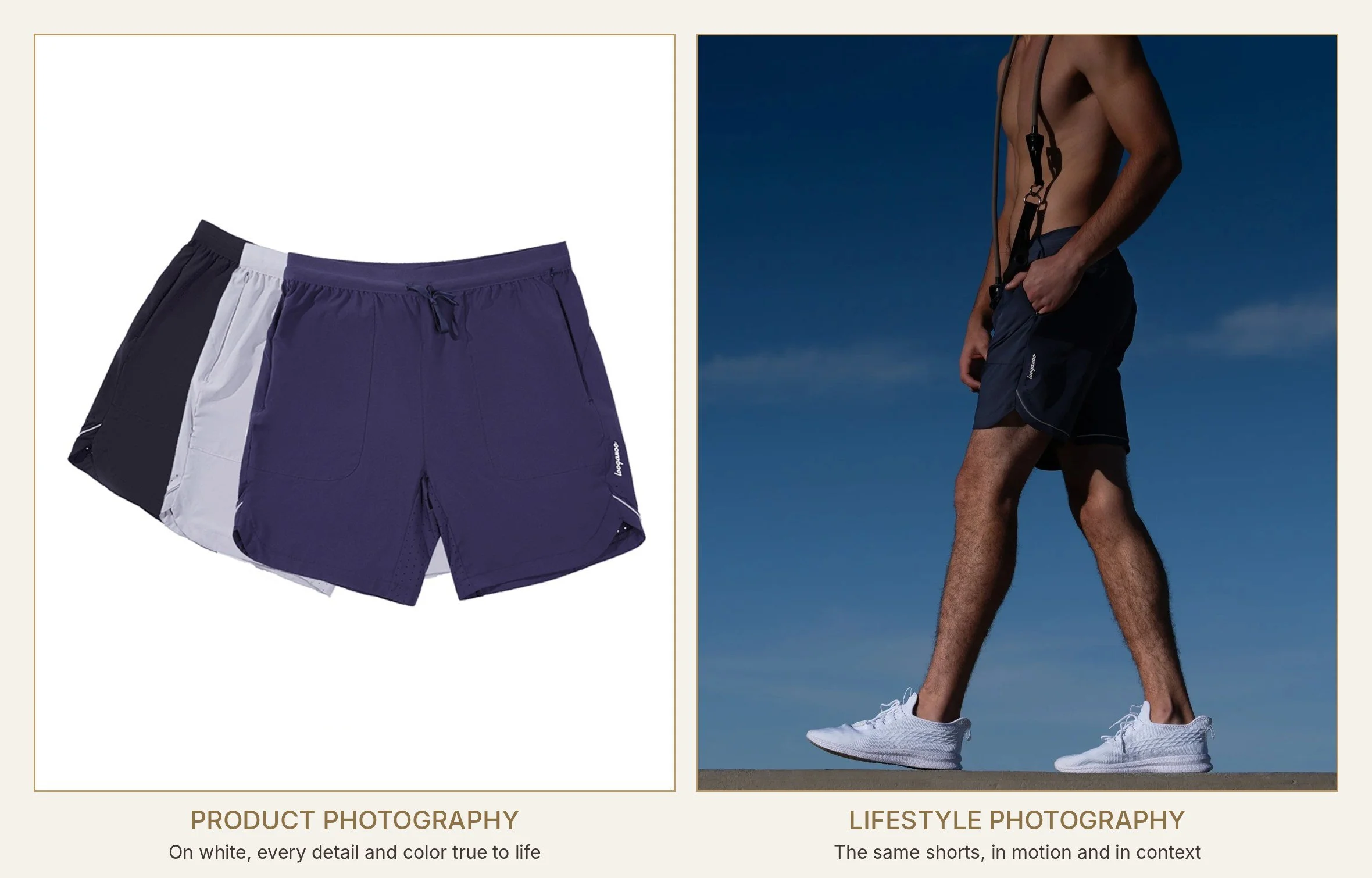
Product photography: the product as the hero
Product photography is a discipline of accuracy and detail. The product sits on a clean background, often white, or within a minimal styled set, and the lighting is engineered to render its true color, texture and form. Coverage typically runs four or five angles per product, and more for intricate pieces like watches or fine jewelry.
It's exacting work. Every material responds to light differently, reflective surfaces need lighting refined angle by angle, and consistency across an entire range matters as much as any single frame.
Where it performs: product pages, Amazon and marketplace listings, catalogs, wholesale line sheets, and anywhere a customer needs to inspect before committing.
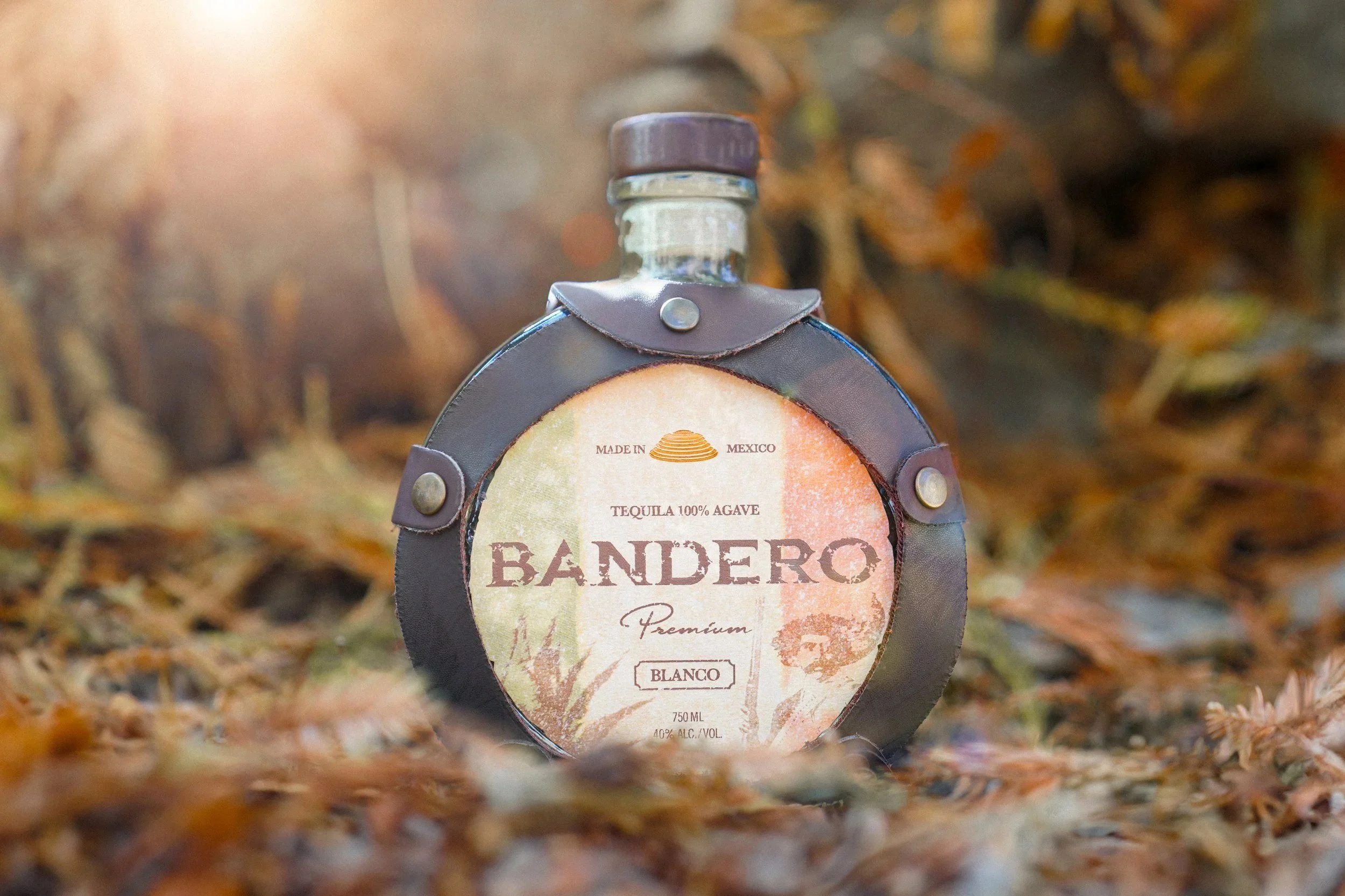
Lifestyle photography: the product in a real moment
Lifestyle photography places the product within a scene of people, places and movement: an athlete mid-stride in your running shoes, friends sharing a drink at golden hour, a model wearing your jewelry in natural light. It's looser and more kinetic, and it's built around a feeling rather than a spec sheet.
Where it performs: homepage heroes and banners, social, paid media, email, campaigns and press.
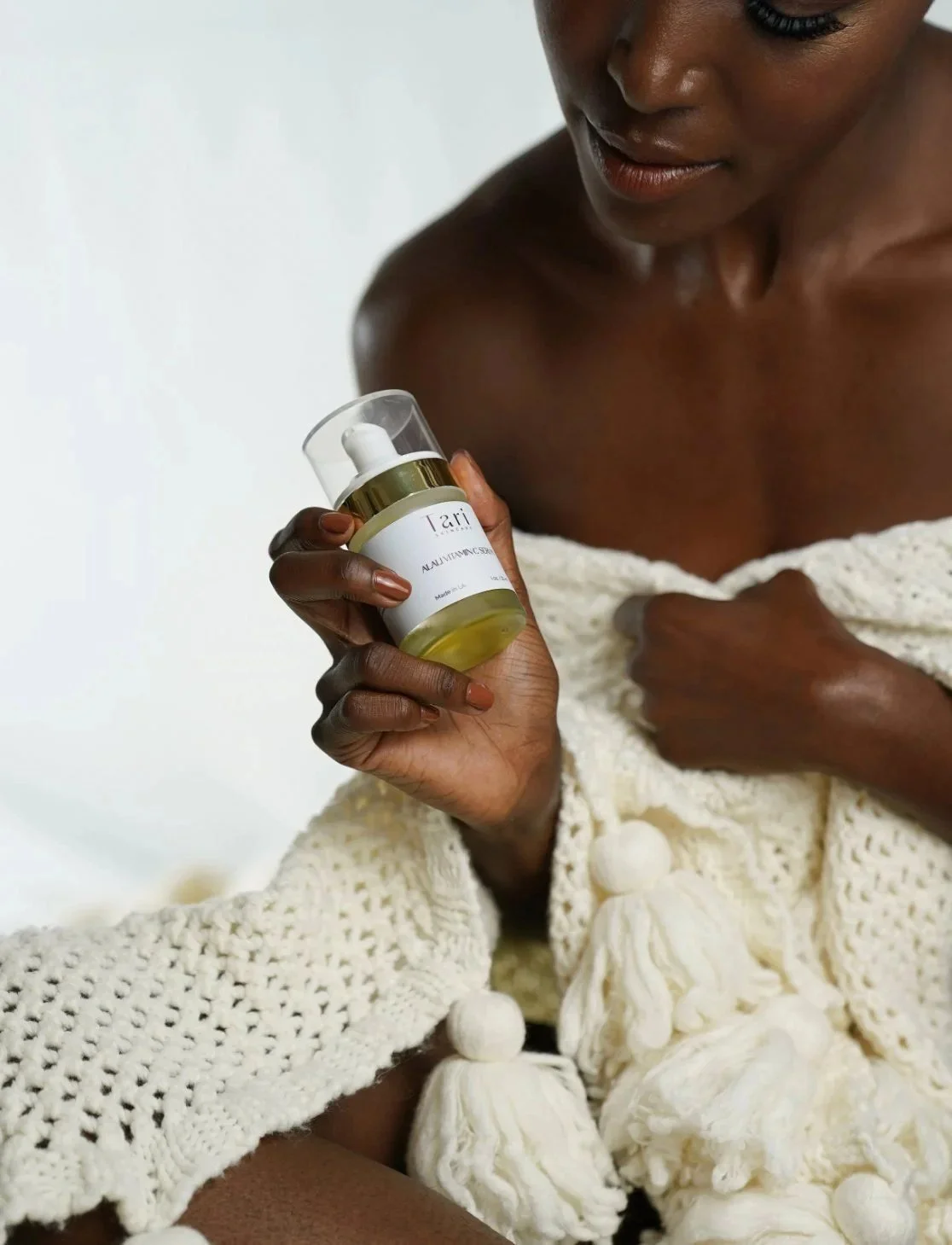
How they work together across the customer journey
Think of the two as consecutive stages. Lifestyle imagery lives at the top of the funnel, in the feed, the ad and the homepage, where its job is to make someone stop and want in. Product imagery takes over on the product page, where the customer is scrutinizing color, detail and fit. If either stage is weak, the journey breaks: striking campaign imagery can't save a dull product page, and flawless product shots won't get seen without something to draw people in. For how that translates into return on your investment, see whether professional photography is worth it.
What each takes to produce
Setting: product work happens in the studio under controlled lighting; lifestyle happens on location or a styled set, often in natural light.
Team: product needs the photographer and sometimes a hand model; lifestyle adds talent and often hair, makeup and styling.
Pace: product is methodical and precise, angle by angle; lifestyle is fluid, with more variety per setup.
Primary costs: product centers on studio time, lighting and retouching; lifestyle adds talent, locations, permits, wardrobe and travel.
Lifestyle productions usually carry a higher investment because there are more people and moving parts. For realistic figures, see how much to budget for professional product photography.
How to structure a shoot that captures both
There are three approaches, and the right one depends on the size of your range and your budget.
1. One day, divided in two. This is how roughly 80% of my productions that need both are structured: lifestyle in the morning and studio product in the afternoon, or the reverse. It works well when the product count is modest.
2. Two photographers, rotating. With a larger budget, I bring in a second photographer. One captures product in the studio while I shoot lifestyle on location, and we rotate through the day. The output in the same hours increases dramatically.
3. Two dedicated days. For larger ranges, or anything physically demanding for the talent, separating lifestyle and product into individual days delivers the strongest results. Here's why.
A lesson from compressing it into one day
I once photographed Loogaroo, a men's athletic apparel brand that wanted lifestyle and studio product imagery in a single day on a tight budget. I understood the reasoning; a second day simply wasn't in the budget.
We started early with the athletes outdoors, training hard in full sun, sweating through real workouts. The imagery was powerful. Then in the afternoon we moved into the studio.
Studio product work is demanding in its own way. The lights run hot, and the posing has to be precise to present the product at its best. It's detail work, nothing like the fluid movement of a lifestyle session. By then the talent was exhausted and sunburnt. We delivered, but the studio imagery wasn't as strong as it could have been, and the sunburn added significant retouching in post.
Since then, when a production combines demanding lifestyle work with extensive studio product, I recommend two days. The second day often pays for itself in stronger imagery and less post-production.
For how long each portion takes, see how long a product photography shoot takes.
FAQ
Is lifestyle or product photography more important? Neither on its own. Lifestyle imagery earns attention and creates desire; product imagery gives customers the confidence to buy. Most brands need both.
Can lifestyle and product photos be shot on the same day? Yes, for smaller ranges, with half the day dedicated to each. For larger ranges or physically demanding shoots, two days or two photographers typically delivers stronger results.
Is lifestyle photography more expensive? Usually, because it involves talent, locations, styling and sometimes permits. Product photography centers on studio time, lighting and retouching.
What's the difference between lifestyle and campaign photography? Campaign photography is lifestyle imagery created for a specific marketing initiative, typically with more creative direction and production behind it.
Need both for your brand?
Tell me how many products you have and the feeling you want your imagery to create, and I'll design the right mix of lifestyle and product, in one day or two. Explore the product and campaign work, or get in touch here.