
If you're selling a real product to real people, the product, and usually the person using it, need to be photographed for real. Audiences are getting good at spotting a fully AI-generated image, and when they do, it costs you trust. Where AI adds real value is alongside an authentic photograph: building a scene behind a product you've actually shot, creating looks that no budget could construct, or filling small gaps such as a short social clip, all without flying a full crew to a distant location. Used that way, by someone who understands lighting and cameras, AI is a great added tool for campaign and e-commerce photos. Used instead of a shoot, it's a shortcut your customers will notice.
I use AI in my own work, so this isn't an argument against it, but here's where it delivers and where it falls short.
Why the real thing still matters
People can usually tell when an image is AI. It felt new and exciting at first, but audiences have caught on quickly, and many now push back against it.
That matters most for the products most brands sell: footwear, apparel, jewelry, drinkware, beer, skincare. Anything a customer will hold, wear or taste. They need to see the real product, its true shape, color and texture. Fully generated images often shift small details like proportions, and customers notice when the product arrives. If the image doesn't match what arrives, you've lost their trust and likely gained a return.
It matters just as much for people. A model laughing at a pool party, an athlete mid-sprint, friends sharing a drink: that real emotion is what sells a lifestyle, and it's exactly what AI still gets slightly wrong. If you're selling to people, synthetic people are a hard sell.
There are exceptions: ultra-low-cost, mass-market sellers already rely heavily on generated imagery, and tech products, often shown as clean renders anyway, can sometimes get away with it. For nearly everything else, authenticity wins.
How I use AI in my work
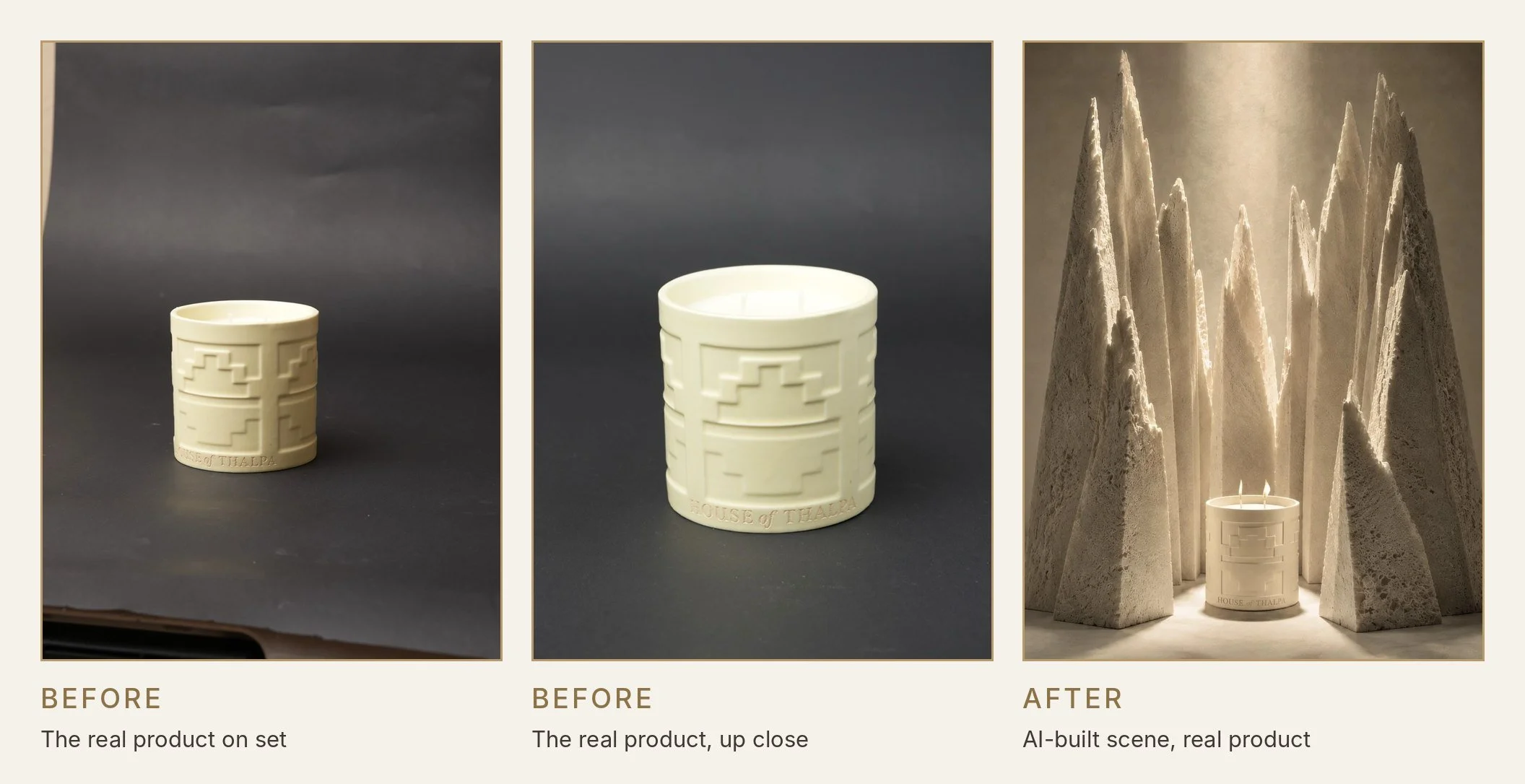
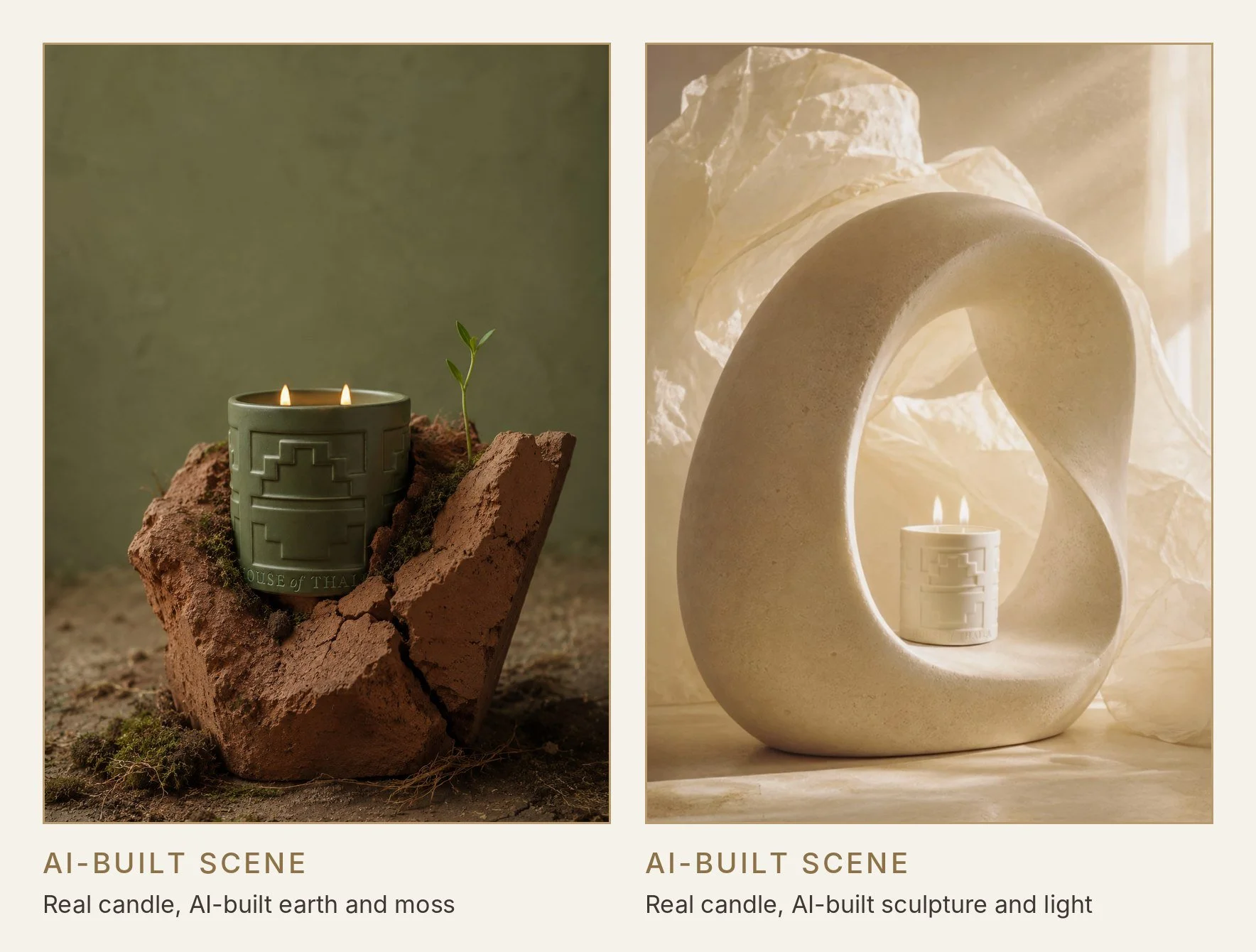
1. A real product, an AI-built scene. This is where AI has most transformed my product work. Building a set around a product, such as a fully lit garden scene, used to cost clients thousands of dollars. I still build physical sets when a project calls for that tactile quality, but I can now also photograph the product for a scene I've envisioned, then build the environment around it in AI.
The key is lighting the real product to match, so if the scene calls for sunlight falling on the product, I light it with a warm gel from the angle the sun would come from, then build the scene around that. The product is a real photograph; only the environment is AI. Done well, the result looks striking, and it opens up looks that would be impossible or far too expensive to build for real. It also saves clients a good deal, because there's no need to travel with a full crew to one specific landscape.
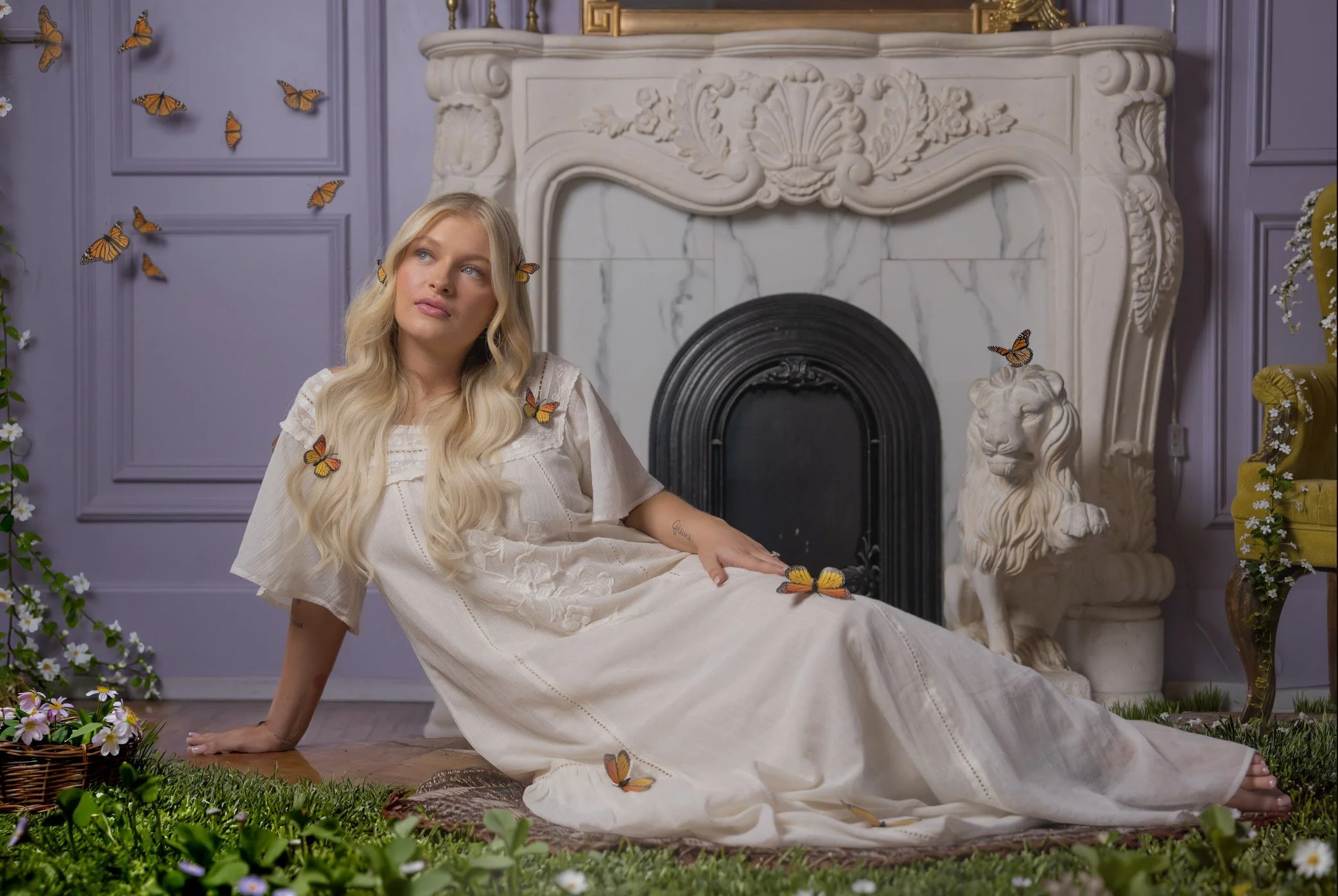
2. Fantastical scenes that can't exist. I recently photographed a music artist who wanted to appear in a fairy garden. I photographed her on set, then placed her into a fairy-garden environment, with butterflies around her and grass at her feet. She is entirely real and reads as a true photograph, but the world around her couldn't have been created any other way.
3. Filling small video gaps. When a client doesn't have the budget or timeline for a videographer, I've occasionally used AI to create short clips, primarily for social, so the stills have motion alongside them. AI video isn't fully there yet; you can still tell. So I use it sparingly and only for small pieces.
Strong AI imagery requires a photographer's knowledge
The biggest misconception I encounter: people watch a few AI videos on Instagram and assume it's easy. It isn't. I can spend an hour or two building a single scene around one product.
The results depend on prompting, and effective prompting depends on photographic knowledge. To get the image you have in mind, you have to tell the AI precisely what you want: where the light originates, how hard or soft the shadows fall, what color gel is over the light, how much background blur (bokeh), even the character of a specific lens or a cinema camera like a RED. Without that knowledge, you won't come close.
So the choice usually isn't "AI or a photographer." The strongest AI imagery comes from someone who understands photography.
The legal side, briefly
A few considerations before you build your brand on AI imagery:
Copyright: in the US, the Copyright Office has stated that material generated entirely by AI, without meaningful human authorship, can't be registered for copyright. That can make it harder to stop competitors from using similar images.
People: generating someone who resembles a real person or a celebrity without permission can create legal exposure. Professional models sign releases for precisely this reason.
Accuracy: your images need to represent what the customer will actually receive. A product that looks different from its photos invites returns and complaints.
When I combine a real product photograph with an AI-built scene, the product and any person in the image are still photographed for real, with the standard releases and usage agreed. For more, see what you need to know about photo rights and ownership.
This isn't legal advice. For anything high-stakes, consult an attorney.
When AI works, and when you need a real shoot
AI can work for:
Building or extending a scene around a real product photograph
Fantastical or impossible settings, like the fairy garden
Quick background variations for testing ads
Short motion clips to fill a gap on social
You need a real shoot for:
The product itself, on your product pages and marketplace listings
Anything where color, texture or fit influences the sale: apparel, footwear, jewelry, beauty
People and emotion: models, lifestyle, food and drink being enjoyed
Campaigns where your brand's credibility is on the line
FAQ
Can I sell products using only AI-generated images?
You can, but for most physical products it's a risk, because customers notice, trust declines and images that don't match the real product lead to returns.
Do you use AI in your photography?
Yes, around real photographs: AI-built scenes behind products I've photographed, fantastical settings, and occasional short video clips. The product and the people are always real.
Is AI imagery cheaper than a photoshoot?
It can reduce set-building costs, but strong results still require skill and hours of work. It's best used to extend a budget, not replace the shoot.
Will AI replace product photographers?
Not for brands that sell to people who care about what they're buying. It's a tool, and it performs best in the hands of someone who understands light and cameras.
Real photography, enhanced by AI
I photograph real products and people, and use AI where it elevates the work, never where it cheapens it. Tell me what you're selling and the look you're after. Get in touch here.